How to Maximize a Minimalist Presentation
New York City is known as one of the busiest places on earth. This Mecca of American Capitalism does not hold this position due to population—The Big Apple does not even make the world's top 10 most populous cities. While full of plenty of people with a population of just under 8.5 million, its propensity for busyness more appropriately comes from shots of places like Time Square, flush with people no matter the time, day, or season.

Francisco Diez from New Jersey, USA, CC BY 2.0 <https://creativecommons.org/licenses/by/2.0>, via Wikimedia Commons
It does not get much more maximalist than Times Square, with its flashing signs, florescent stores, and hurrying crowds. People come from around the world to experience this space, both to be a part of its unfolding narrative and to see the brightness and newness of it all. There is a problem with the in-your-face nature of places like Times Square, though: it is so loud, bright, and busy that it can be mentally overwhelming and overstimulating (Vrooman, 2015). In an attempt to inundate everyone who enters with as many advertisements and opportunities to engage, what too often happens is that the individual is unable to receive… well… any of it.
Sometimes, the largest impact does not come from the loudest and brightest presentation. Often, the simplest and most basic experiences are what leave lasting impressions. As a pastor and professional speaker, I have found this to be correct in my context. In a world seemingly teeming with Times Square-energy, it is incredible how profound and long-lasting a well-crafted, simple sermon or speech can be. Inside and outside of faith circles, the masters of this art are able to move multitudes with just a handful of minutes and a few well-placed words.
This concept is true of Jared Rypkema’s TEDx-FSCJ talk, Think Like a Storyteller. Rypkema, the founder of Bridge Eight Press, works as a writer, editor, and content producer with one goal: connecting others through stories. You can watch his TEDx Talk by clicking the link above or pressing play here:
The Message
Jared’s presentation is profoundly simple in delivery. He does not utilize any visual aids, instead choosing to invite his audience to paint pictures within their minds as he unfolds a narrative before him, weaving the story expertly in and out of the threads of his speech. His point is clearly laid out in the YouTube video description: “Stories shape the very way we experience the world, the kind of people we strive to be, and our capacity to connect and be connected with one another.” In short, stories make us better human beings.
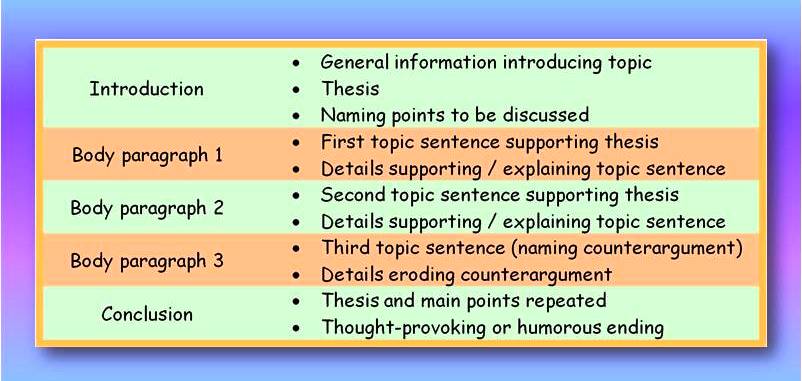
To make this point, Rypkema utilizes the basic essay structure with which middle school and high school students are all-too-familiar:
· Introduction
· First Point
· Second Point
· Third Point
· Conclusion
If your education was anything like mine, you will recognize this as the writing organization taught to so many of us as we prepared for our first in a long, long line of standardized tests. This was so heavily embedded in my mind as the way to write essays that I can vividly remember the shock I felt when my senior English teacher told us to never—under any circumstance—communicate using this structure ever again. She was adamant that it was antiquated, dull, and incapable of adequately conveying our thoughts, positions, and narratives to others.
(Side Note: It was not until later that I believed her. In preaching class, her point was repeated regarding sermons from a professor. "Everyone knows how to give a sermon that uses this basic structure. If you want people to listen and keep coming back to listen, you would do well to do something different, something that actually keeps the congregation’s attention.”)

So why does this professional communicator choose to use this structure for what could arguably be his one and only shot at a TEDx Talk? Because it is simple.
Jared slightly modifies the above structure by expertly weaving a story through the threads of the existing body. He tells the story of the aftermath of the devastating, coordinated assaults in Paris on November 13, 2015. His telling starts wide as he shares of the reactions of the gathered masses to a man bringing his piano and playing amid their grief and pain, then focuses in on the story of one woman’s story, then the story of the son watching her in silent mourning. This new woven structure takes on a different, more poignant feel:
· Introduction—Thinking like a storyteller can change your life and will change how you engage the world around you.
· Point 1/Story 1—The storyteller seeks to respond to circumstances in life rather than react/Paris Attacks and Singing “Imagine”
· Point 2/Story 2—The storyteller steps into the shoes of the other to create an authentic, empathetic connection with the listener/The woman on the steps
· Point 3/Story 3—The storyteller invites the listener to connect deeply with their characters/The woman’s son, a victim’s brother
· Conclusion—To connect and be connected is one of the most important elements of what it means to be human… it changes us and changes the world, and we can begin to do this right now.
Analysis
Rypkema’s TEDx Talk is in many ways a master class on how to simply and powerfully convey your message to others. He takes his audience through tragedy and grief and, in just thirteen minutes, arrives at a more robust human connection. As a student of effective communication, I utilize this rubric as a way to analyze presentations like this one:

The first time I watched the talk, I did not look at the rubric, wanting to experience the presentation with all my attention. Watching through it a second time, I made the following observations:
· Introduction: Jared immediately grabs the listener's attention and establishes his credibility within the first forty-five seconds of his talk. The invitation and institution of ethos draw the audience in, readying them to hear and engage with the presented thesis and preview of the points to come. Before the story is ever told, I knew what this talk was about and why it matter to both him and to me.
· Delivery: During my first watch-through, I was intrigued by Rypkema’s timing and use of pauses. There was a particularly interesting rhythm and beat to his speech that took me a moment to adjust to. During the second round, I realized why he does this—he is vibing off the audience, allowing them the time to process different parts of this presentation. What at first felt like an awkwardly-timed tempo was actually the extemporaneous speech of a communicator so keyed into his audience's need that he could tweak his performance as he delivered it. This, paired with the modified speech structure, made the delivery both unique and impressive.
· Support, Argument, and Organization: Our presenter’s main source of support is the narrative woven throughout the talk. There was a small handful of uncited material, but most of this came from within the story and could very well have been made up to support the story being told instead of its historicity. The quotations used were powerful, and his figurative language aided the storytelling without ever overpowering it. His presentation was effective in making his point without ever becoming argumentative or abrasive, and as already mentioned, his masterful use of story led to a well-organized and well-presented speech.
· Conclusion: Rypkema successfully wrapped up his presentation by reminding everyone of his thesis and supporting points and then challenging them to make use of what they learned. The call to action at the end left no doubt that each person present had the capacity to engage the world “thinking like a storyteller”, and that the world would be better for it if we did.
Using this rubric, I also want to point out two small adjustments that might have enhanced this already-stellar presentation:
· Visual Aids: Rypkema clearly made an intentional decision to keep this talk as minimalist as possible, choosing to keep it devoid of any visual aid other than what was already in place for the background of the TEDx-FSCJ aesthetic. While personally, I appreciate this decision, as it allows the theatre of the mind to run wild, many prefer and desire some visual stimulant and focus. Having a simple, black-and-white picture for each point—even one that is abstract or unfocused so as not to keep attention away from the story itself—might have added an important element to this speech and better held the attention of some in the room.
· Conclusion Clincher: While the conclusion was strong, the ending could have been more emphatic. Without changing the wording at all, a different pace and emphasis could have added enough weight to make the thesis and the audience’s engagement with it more urgent and important. Instead, Jared falls into the trap of too many speakers when he somewhat peters out, as if he has expended all of his energy and has none left to give for the last word. Master communicators know how important that last line is, and will make sure there is energy and emphasis enough to clinch the ending (Vrooman, 2015).
Finally, I want to point out two issues present in this TEDx Talk that are only issues because of the medium through which I engaged it. Please note that neither of these points are criticisms of Rypkema’s presentation but are instead worth future presenters taking into account in their preparation and execution:
· YouTube Can Be The Worst: During this 13-minute TEDx Talk, I was forced to endure three different commercial breaks ranging from 45 seconds to 4 minutes. None of these interruptions were curated to be at ideal times during the talk; one came at an extremely inopportune moment while Jared was halfway through sharing an emotionally-charged part of the narrative. While this cannot always be helped, it is at least an issue of which to be aware. Speakers might decide that their presentation is better accessed through a different video platform or add a disclaimer at the beginning that ad-enriched platforms might detract from the desired experience.
· The Camera Is An Audience Member: We learn from Buddy that the Code of the Elves begins with “Treat every day like Christmas”. Similarly, one of the first rules of any presentation that is filmed and will be uploaded online is to treat every video camera as if it were a multitude of audience members. Look at it, speak to it as you would to any other individual in the room, and assume that the reactions you receive in person are similar to the ones of those watching from their respective screens. Rypkema is clearly not speaking to an online audience and has probably been instructed by his producers to ignore the camera so that they can achieve this specific videographic aesthetic. As one engaging via an online platform, I would have appreciated Jared making eye contact with the camera because it would have meant making eye contact with me.

In a world full of poor presentations and subpar communication, it is a gift to experience one as gifted as Jared Rypkema’s TEDx-FSCJ talk. When maximalism and busyness pervade so much of our world and media, it stands as a stark reminder that sometimes the simplest of experiences make the largest of impacts.
References
(n.d.). Bridge Eight Press. Bridge Eight Press. Retrieved June 8, 2023, from https://www.bridgeeight.com/
CNN (2022, November 8). 2015 Paris Terror Attacks Fast Facts. Retrieved June 8, 2023, from https://www.cnn.com/2015/12/08/europe/2015-paris-terror-attacks-fast-facts/index.html
Diez, F. (2009). Times Square, New York City [Photograph]. WikiMedia Commons. https://commons.wikimedia.org/wiki/File:Times_Square,_New_York_City_%28HDR%29.jpg
Favreau, J. (2017, December 16). "The Code of the Elves" from Elf [Video]. YouTube. Retrieved June 8, 2023, from https://www.youtube.com/watch?v=pMcwRXA4mFc
Kaufman, A. (2022, September 26). What is the world’s most populous city? Top 10 most populous cities in the world, US ranked. USA Today. Retrieved June 8, 2023, from https://www.usatoday.com/story/news/2022/09/26/most-populous-city-in-world/10427581002/
Lennon, J. (2017, May 13). Imagine [Video]. YouTube. Retrieved June 8, 2023, from https://www.youtube.com/watch?v=rAn-AWXtHv0
Powers, K. (2014, June 25). The five paragraph essay. English Writing Teacher Blog. Retrieved June 8, 2023, from https://englishwritingteacher.com/2014/06/
Rypkema, J. (2021). Jared Rypkema. Jared Rypkema. Retrieved June 8, 2023, from https://www.jaredrypkema.com/
TED. (2017, January 8). Think Like A Storyteller | Jared Rypkema [Video]. YouTube. https://www.youtube.com/watch?v=sj8F7bn45DM
U.S. Census Bureau. (n.d.). Quick Facts: New York City, New York. U.S. Department of Commerce. Retrieved June 8, 2023, from https://www.census.gov/quickfacts/newyorkcitynewyork
Vrooman, S. S. (2020, April 5). How To Get Online Speaking Right, From Meetings To Classrooms To Job Interviews To Recordings: Part One, Help Yourself. The MoreBrainz Blog. Retrieved June 8, 2023, from https://morebrainz.blogspot.com/2020/04/how-to-get-online-speaking-right-from.html
Vrooman, S. S. (2015). The Zombie Guide to Public Speaking (2nd ed.). MoreBrainz Project.


.jpg)

Comments
Post a Comment